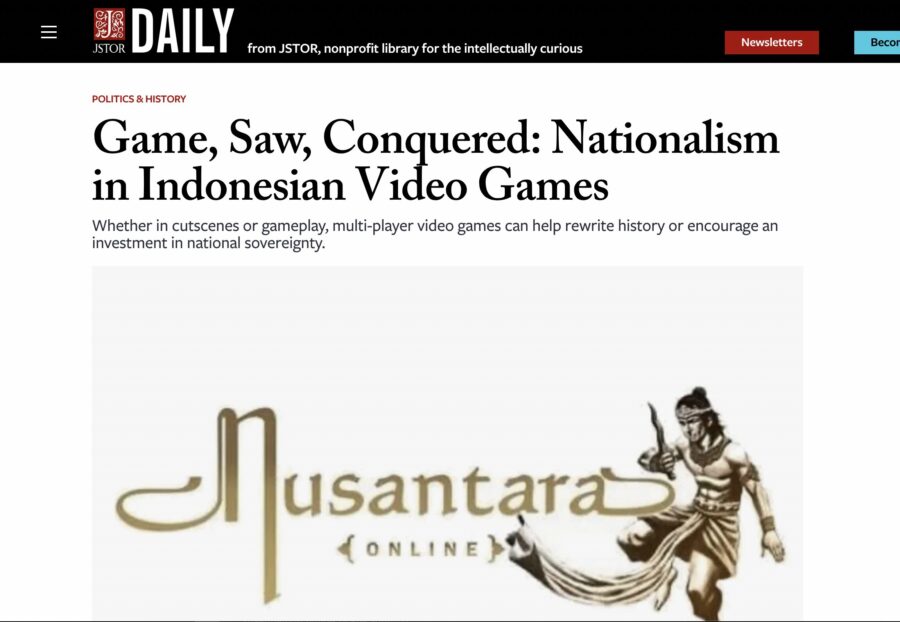
I just came across this article posted in JSTOR Daily featuring my research on Nusantara Online game. Didn\’t even realize they did this. It is interesting to read how the author connects playable nationalism to the concept of \”soft\” power.
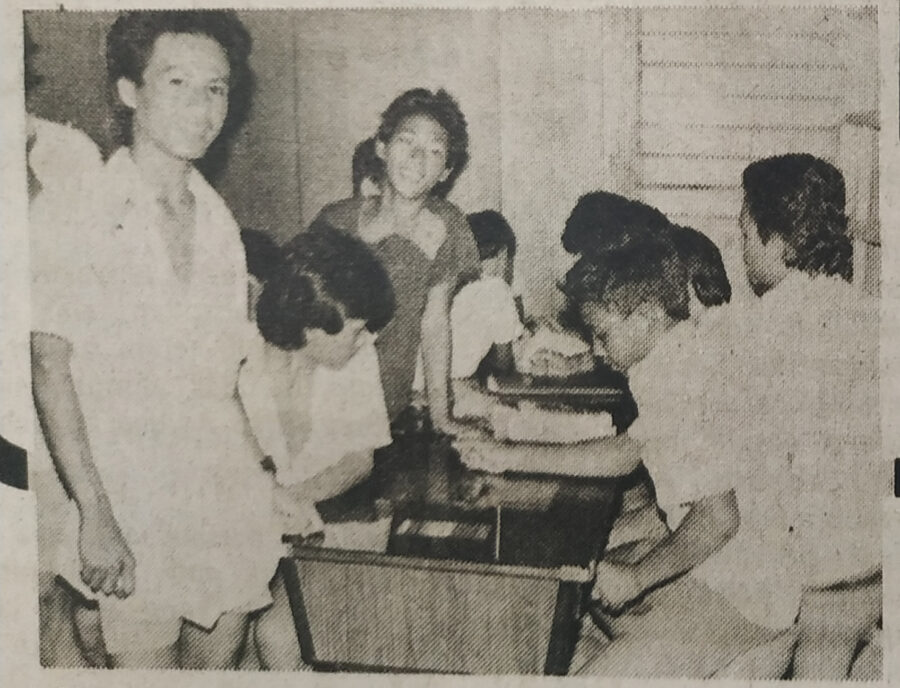
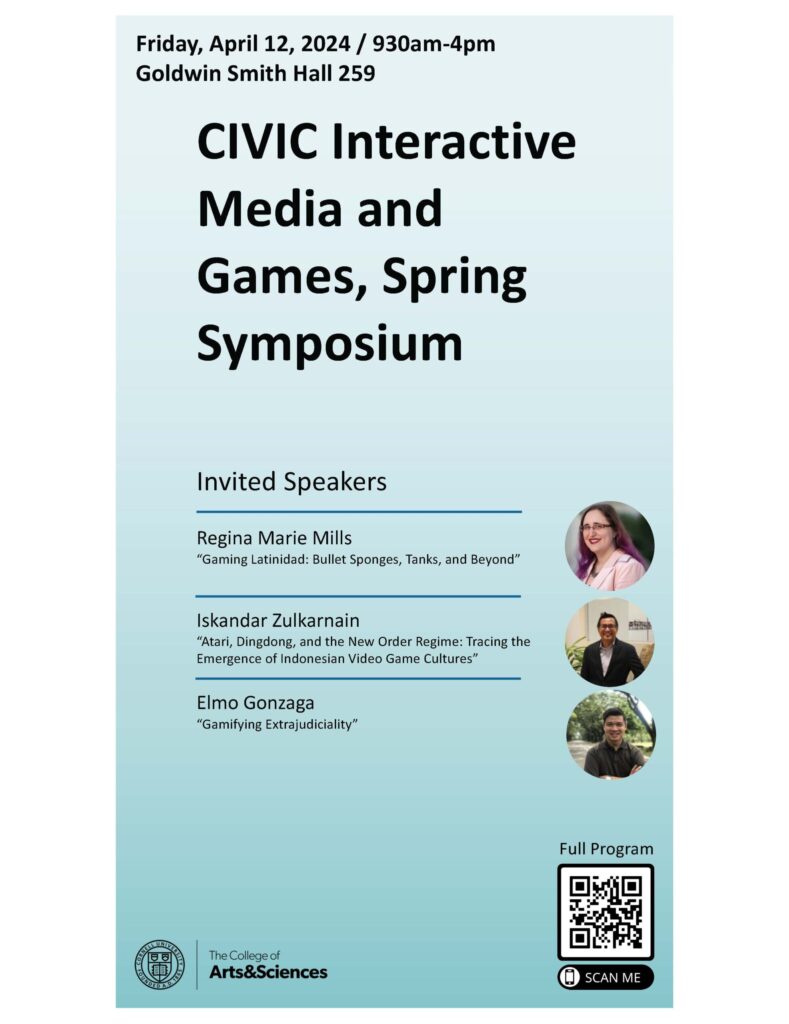
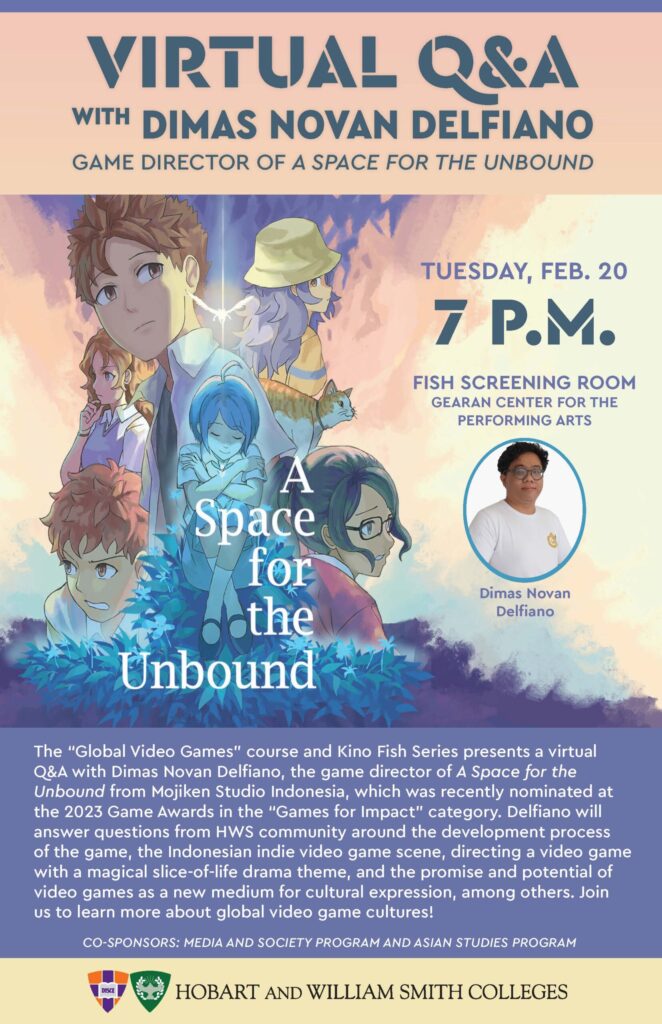
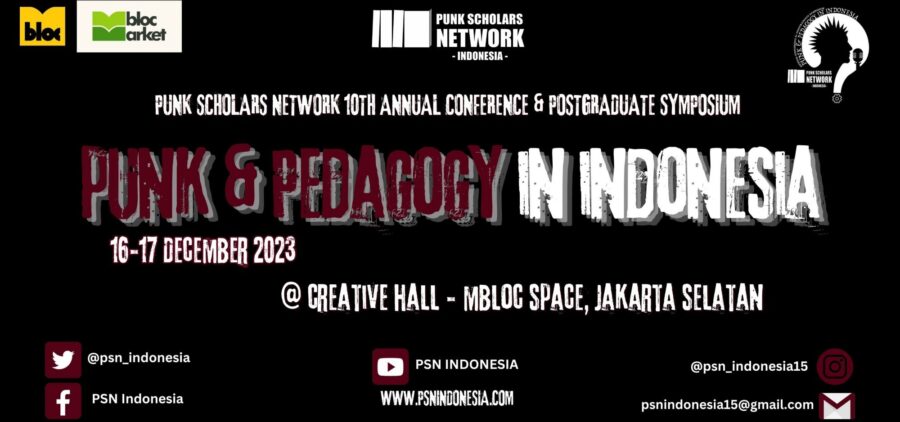
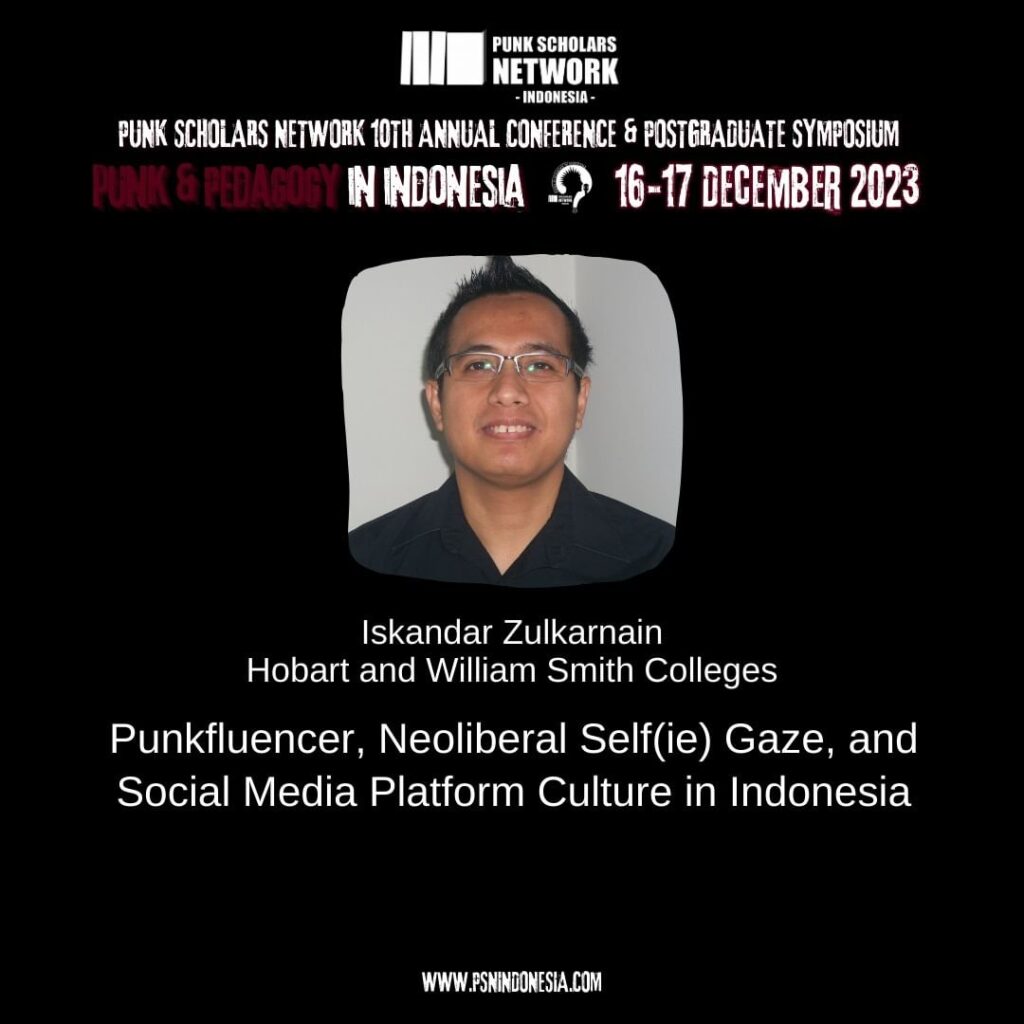
Excited to be participating in this symposium. I will be giving a presentation on the historical trajectory of Atari and dingdong, a local form of video game arcades, under the New Order regime. Come check it out if you are in the area!
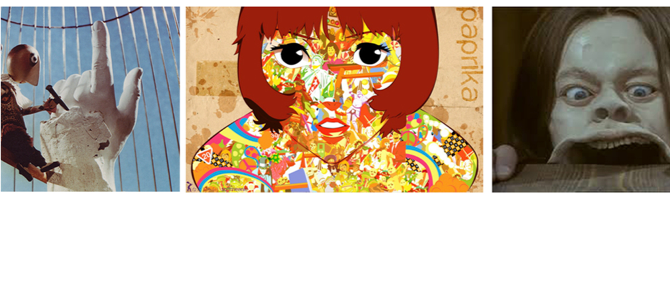
This semester I am revamping my Intro to Global Animation syllabus. I decided to reduce the reading load because I want students to have more time in practice-based activities. This is also the first time I will try to use a professional stop motion animation software, Dragonframe, for their animation project. Hopefully it will go smoothly.
I also would like to credit Mihaela Mihailova’s “An Anti-Racist Animation Syllabus” for listing animated features and shorts with protagonists of color and/or directed by PoC. Many of the films I use in my course are selected from her list.
Below is my updated syllabus. Leave comments if you have any suggestions as I may still be able to change some of the contents of the course schedule.
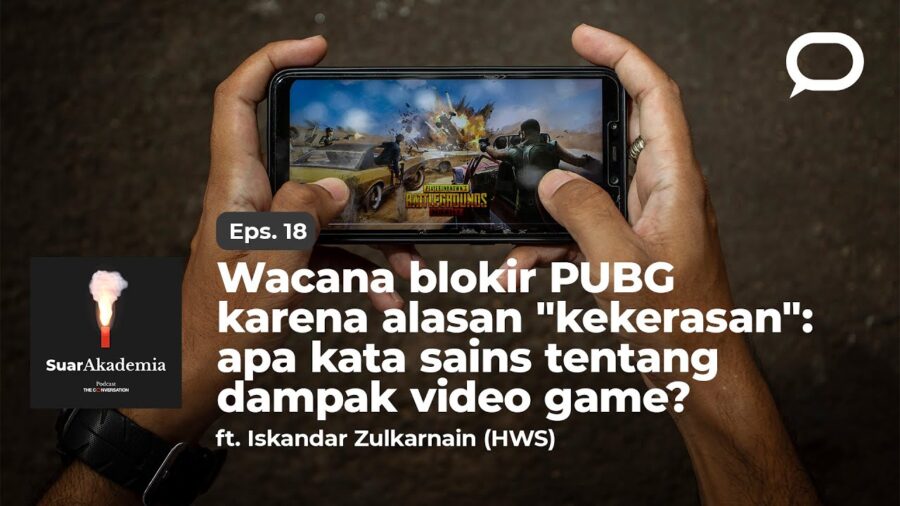
This video is from a podcast interview that I did for The Conversation Indonesia podcast show, SuarAkademia, in 2021. I was invited by Luthfi Dzulfikar, the producer of the podcast program, to discuss about the discourse of “fatwa haram” on video games like PUBG in Indonesia, which I personally think is ridiculous and historically clueless.
I gave my two cents about the long history of moral panic about video games, which usually revolves around the rising popularity of a new genre, or a new mechanic system (e.g. battle royale), and also briefly touched upon my current research on the early history of Indonesian video games culture. You can watch the full interview (in Indonesian) below, or listen to it here.
This one here is a video from the Conversations Across Screen Cultures event that’s part of the Finger Lakes Environmental Film Festival (FLEFF) in 2021. I am very humbled and honored to be invited by the organizers of this event to talk about my personal trajectory as a scholar in global digital humanities. Big thanks again to the organizers of the event: Patty Zimmermann, Leah Shafer, Enrique González-Conty, and Jiangtao “Harry” Gu, as well as everyone who came to the event.
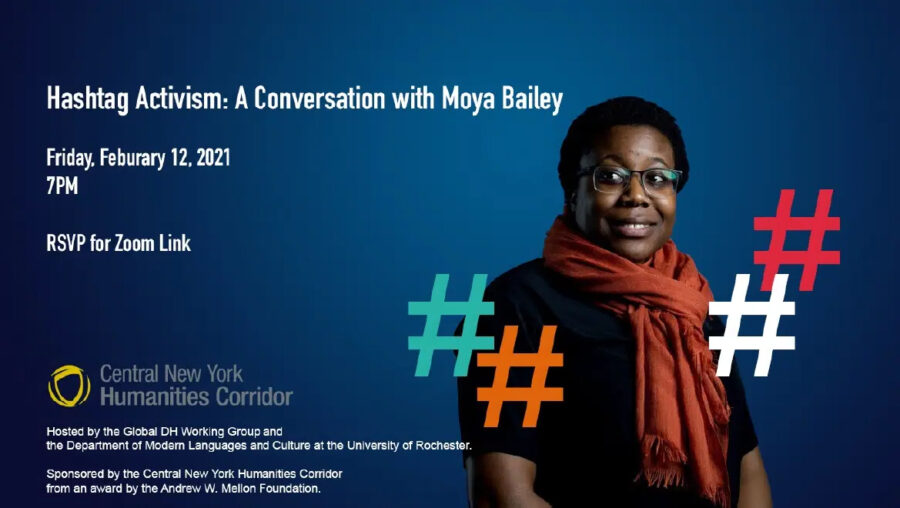
This one is a video from the Global Digital Humanities event in February 2021 that I moderated. Our guest speaker was Moya Bailey, co-author of the #HashtagActivism: Networks of Race and Gender Justice (MIT Press, 2020). I really enjoyed moderating this event. Among other things, Moya and I discussed about the position of hashtag activism as a new form of digital activism, especially for people of color and people with disability, and the accusation of hashtag activism as a lazy form of activism, or what they called “slacktivism.” The video is “unlisted,” so it can only be watched directly on YouTube.
I just realized that I have several videos scattered on YouTube. So in the hope of archiving them, I am going to post them here.
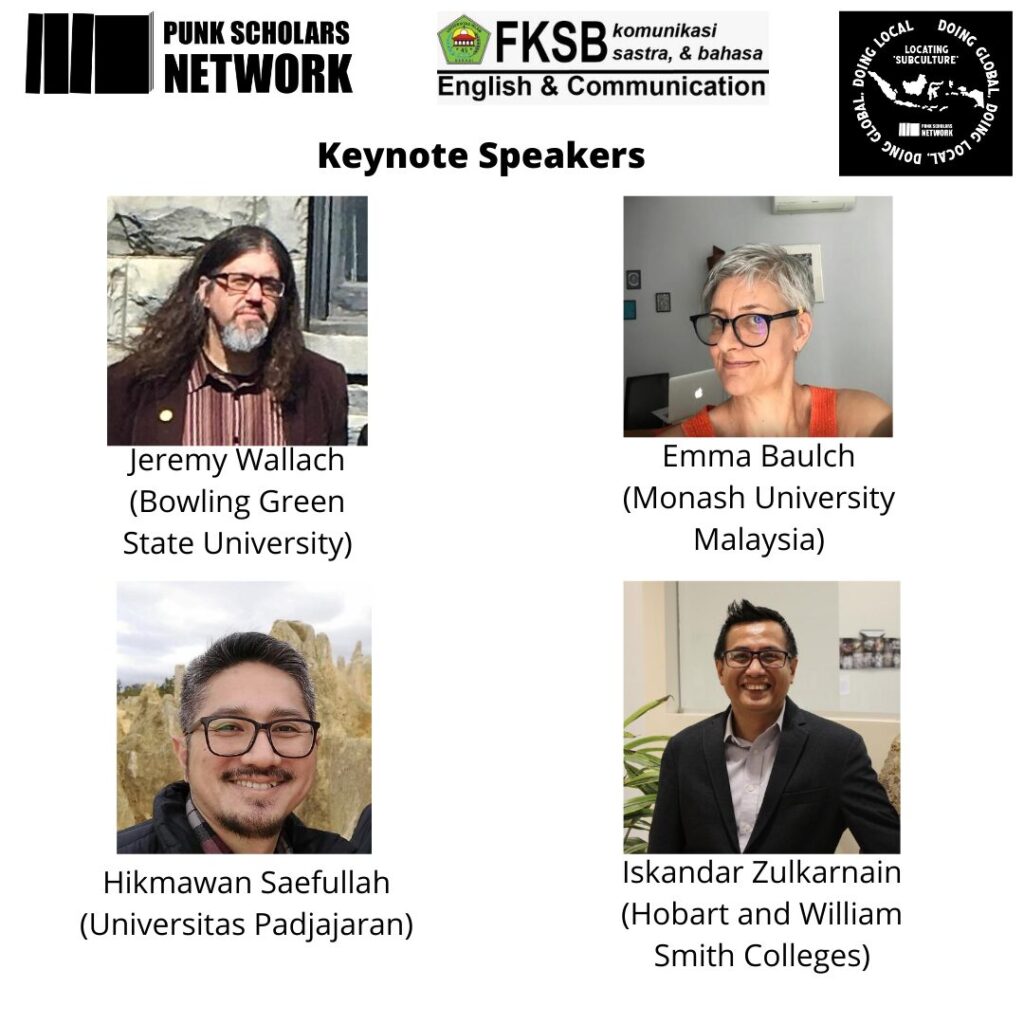
This one here is from the keynote session of the Punk Scholars Network Indonesia 2020. I had a good experience in this session. Thanks William Anthony Yanko for moderating and Muhammad Fakhran Al Ramadhan for organizing the event!
After taking a long hiatus, I decided to update this personal website with another student appreciation post. This one is an animation work by one of my students at HWS, Jack Harris. He made this work for his independent study in animation aesthetics. It was a bittersweet one for me (and perhaps for Jack as well) since he made this project during my last semester at HWS and also his senior year. The title says it all. Enjoy!